
8 Bit Tower Defense Bosses Guide: Which Bosses Appear, When They Arrive, and How to Beat Them
The named bosses of 8 Bit Tower Defense, the warning banner before each observed boss wave, and the levels, traits, placement and abilities that beat Scarecrow, Old Croaker and the Tide Titan.
Quick answer
Story acts in 8 Bit Tower Defense end with a named boss that arrives on a telegraphed boss wave - in Greenfield Outpost that means Scarecrow on Wave 8 (Act 1), Old Croaker on Wave 10 (Act 2) and Blightbough on Wave 12 (Act 3), and a dedicated World Boss mode unlocks the Tide Titan once you clear Greenfield Outpost Act 3. You beat them with the game's own loop: place units, upgrade them, unleash their abilities, and hold the path until the boss health bar empties.
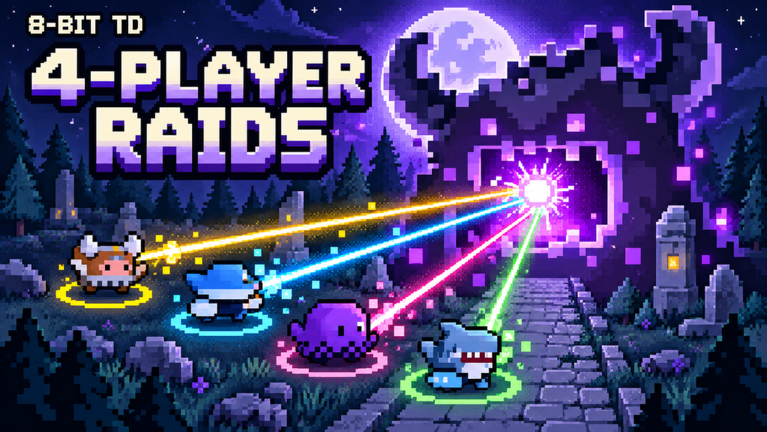
- Which bosses: named story bosses (Scarecrow, Old Croaker and Blightbough so far), the Tide Titan in World Boss mode, and more bosses across 4-player raids and later story worlds.
- When: on a boss wave the game announces in advance, e.g. 'BOSS WAVE 10 - OLD CROAKER IS COMING', with a named health bar like 'Old Croaker [640/640]' once the boss enters.
- How to win: spend gold on unit levels, reroll traits and trades, cluster units at a choke point on the path, and fire abilities into the boss's health pool.
8 Bit Tower Defense is built around boss fights. The official game description compresses the whole game into one line - 'Place your units, upgrade them, unleash their abilities and take down every boss' - and that loop plays out across six story worlds, three difficulties and 4-player co-op raids, plus a standalone World Boss mode. This guide covers the bosses you meet first, the warning banner that announced every boss wave observed so far, and the upgrade, placement and ability habits that make a defense strong enough to finish the fight. If you're brand new, start with the how to play guide.
The named bosses, and when they arrive
Story is where most players meet their first bosses, and every boss wave observed so far is telegraphed. In Greenfield Outpost, each observed act ends with a named boss whose wave number climbs as the acts go on: Act 1 ends on Wave 8, Act 2 on Wave 10, and Act 3 on Wave 12. In the fights observed so far the boss is named on screen both before the fight and after it, so you know what's coming - or what you just beat.
Explore the options
Scarecrow
Ends the act on Boss Wave 8; the run announces 'SCARECROW IS COMING' and closes with 'BOSS DEFEATED - SCARECROW'.
Old Croaker
Arrives on Boss Wave 10 with a health bar reading 'Old Croaker [640/640]' - an early look at how big boss health pools get.
Blightbough
Announced with 'BOSS WAVE 12 - BLIGHTBOUGH IS COMING', the deepest boss wave observed in the outpost.
Tide Titan
The Play menu's dedicated WORLD BOSS encounter, unlocked with the text 'Clear Greenfield Outpost Act 3 to face the Tide Titan'.
The official description counts six story worlds, running from Greenfield Outpost to the Hollow King's Ashen Citadel. The Play menu names Greenfield Outpost, Sakura Shrine, Dustbowl Canyon, Frostbite Pass and Ashen Citadel, each split into six acts, and the official description says bosses are fought across all of them - the outpost is where you learn that rhythm, and the story mode guide picks up from there. The worlds list and game modes pages map the full structure.
How a boss wave unfolds
Mechanic flow
- 1
The warning banner
A banner like 'BOSS WAVE 8 - SCARECROW IS COMING' announces the boss wave - your cue to squeeze in any last placement or upgrade while the wave plays out.
- 2
The boss enters with its own health bar
The named boss appears with a large pool to burn through - Old Croaker's bar reads 640/640 - and extra enemies can keep spawning while it advances.
- 3
The defeat banner
In the fights observed so far, emptying the bar brought up a banner like 'BOSS DEFEATED - SCARECROW' that wrapped up the act.
Two things in that sequence matter for your setup. Every boss wave observed so far opens with an explicit banner, so in the fights this guide covers, what goes wrong is what the wave does after the banner (summons, flyers, speed, health), not a surprise arrival. And the climbing wave numbers show how acts escalate: the later the boss, the longer you've survived, and the more gold and levels you should have banked by the time it walks in.
Beyond the story acts: World Boss, raids and harder difficulties
The Tide Titan isn't part of a story act - it's the dedicated WORLD BOSS encounter in the Play menu, unlocked after you clear Greenfield Outpost Act 3, as its own unlock text states. Boss fights are also tracked progression elsewhere: achievements include 'Defeat 10 bosses', and the event XP quest list pays 250 for a world boss fight, so the boss runs you're already doing feed back into rewards.
Difficulty is selectable between Normal, Nightmare and Legend, so each act - and its boss - can be replayed at a stiffer tier, and the raid maps Rift Gate, Coral Cove and Eclipse Spire carry boss fights into co-op for up to four players. The raids guide, difficulty levels and progression guide cover those routes in detail.
Building a defense that beats a boss
Bosses die to the same systems you use every run - levels, traits, abilities and placement - just in larger amounts. Working on those four before the banner appears is the core of the preparation plan.
Levels. Gold earned from battles feeds the Level tab, and each level adds damage; squad units also gain XP from every match, so your roster quietly gets stronger between runs. If you're short on gold before an act, the how to get gold page lists sources, and unit upgrades explains the upgrade systems.
Traits and trades. Traits and trades add damage, range, cash and more, and both can be rerolled with a dice - one early roll produced 'SWIFT I - 5% faster attacks'. A bad roll isn't permanent; the traits guide covers how rerolls work.
Abilities. Unit abilities are triggered manually, and the official loop ties them straight to boss kills. If firing them mid-wave splits your attention, Settings > GAMEPLAY includes an 'Auto-abilities' toggle that triggers them for you - see unit abilities and auto abilities.
Placement. Placement decides how much of your damage the boss actually walks through. One player built a 'choke hold point' - units clustered where the path bends - and called it 'nobody can get through here', then parked one more unit near the exit 'just in case they try to escape'. Two constraints shaped that setup: a single unit caps at four placed copies ('I can only place four'), so the rest of the slots went to other units, and enemies can enter from more than one direction - in one run they 'come from both areas', which is why each entrance got its own coverage. The how to place units page goes deeper.
Checklist
- Push unit levels before the boss wave
- Reroll weak traits and trades
- Build a choke point on the path
- Plan around the four-copy cap
- Cover every entrance
- Decide your ability timing
What makes boss waves dangerous
Four threat patterns show up around boss waves. Knowing them tells you what to watch for once the banner is up:
- Summons. A tree-like story boss kept spawning extra enemies while it advanced - 'all the little things that you just spawned somehow' - so the wave gets busier after the banner. Keep placing and upgrading through the fight rather than assuming the boss walks alone.
- Flying enemies. In one run, a swarm of bats flew over a defense that was otherwise holding the path, and the player nearly lost. A separate reviewer suspected some units can only attack enemies that walk on the ground - his own guess, not a rule the game states - but the near-loss is the lesson: watch anything airborne and make sure your coverage reaches its route.
- Speed. Very fast enemies ('they're so fast') can cross an under-upgraded line before it kills them, which is exactly why the pre-wave upgrades matter.
- Health. Bosses simply carry a lot of it, and players feel it on screen ('Look at all this health'). Levels, traits and abilities are the damage dials you control; sustained output is what empties the bar.
When a boss wave still collapses, check the two levers first - choke-point placement and upgrade depth. The defense strategy and tier list pages help with lineup choices once both are in order.
Related Guides
Defense Strategy
Build choke points along the road, place units on lit spots and spend match cash between waves.
In-Battle Unit Upgrades
Learn how UPGRADE spending between waves raises a placed unit's stats, with real observed effects.
Unit Tier List
Judge units by battlefield role instead of rarity, and see which summons and upgrades are worth prioritizing.